Openly, yes, With the naturalness Of the hippopotamus or the alligator When it climbs out on the bank to experience the
Sun, I do these Things which I do, which please No one but myself. Now I breathe and now I am sub- Merged; the blemishes stand up and shout when the object
In view was a Renaissance; shall I say The contrary? The sediment of the river which Encrusts my joints, makes me very gray but I am used
I first discovered what was killing these men. I had three sons who worked with their father in the tunnel: Cecil, aged 23, Owen, aged 21, Shirley, aged 17. They used to work in a coal mine, not steady work for the mines were not going much of the time. A power Co. foreman learned that we made home brew, he formed a habit of dropping in evenings to drink, persuading the boys and my husband —
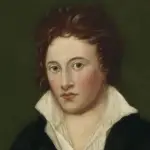
I I weep for Adonais—he is dead! Oh, weep for Adonais! though our tears Thaw not the frost which binds so dear a head! And thou, sad Hour, selected from all years To mourn our loss, rouse thy obscure compeers, And teach them thine own sorrow, say: "With me Died Adonais; till the Future dares Forget the Past, his fate and fame shall be An echo and a light unto eternity!"
II Where wert thou, mighty Mother, when he lay, When thy Son lay, pierc'd by the shaft which flies In darkness? where was lorn Urania
They have set aside their black tin boxes, scratched and dented, spattered with drops of pink and blue; and their dried-up, rolled-up tubes of alizarin crimson, chrome green, zinc white, and ultramarine; their vials half full of gold powder; stubs of wax pencils;
An axe rang sharply ’mid those forest shades Which from creation toward the skies had tower’d In unshorn beauty. There, with vigorous arm Wrought a bold emigrant, and by his side His little son, with question and response, Beguiled the toil. ‘Boy, thou hast never seen Such glorious trees. Hark, when their giant trunks Fall, how the firm earth groans. Rememberest thou The mighty river, on whose breast we sail’d, So many days, on toward the setting sun? Our own Connecticut, compar’d to that, Was but a creeping stream.’ ‘Father, the brook That by our door went singing, where I launch’d
O zummer clote! when the brook’s a-glidèn So slow an’ smooth down his zedgy bed, Upon thy broad leaves so seäfe a-ridèn The water’s top wi’ thy yollow head, By alder sheädes, O, An’ bulrush beds, O, Thou then dost float, goolden zummer clote!
The grey-bough’d withy’s a leänèn lowly Above the water thy leaves do hide; The bènden bulrush, a-swaÿèn slowly, Do skirt in zummer thy river’s zide; An’ perch in shoals, O, Do vill the holes, O, Where thou dost float, goolden zummer clote!
Here, where the world is quiet; Here, where all trouble seems Dead winds' and spent waves' riot In doubtful dreams of dreams; I watch the green field growing For reaping folk and sowing, For harvest-time and mowing, A sleepy world of streams.
I am tired of tears and laughter, And men that laugh and weep; Of what may come hereafter For men that sow to reap: I am weary of days and hours, Blown buds of barren flowers,
And in a little while we broke under the strain: suppurations ad nauseam, the wanting to be taller, though it‘s simply about being mysterious, i.e., not taller, like any tree in any forest. Mute, the pancake describes you. It had tiny roman numerals embedded in its rim. It was a pancake clock. They had ’em in those days, always getting smaller, which is why they finally became extinct.
Now swarthy Summer, by rude health embrowned, Precedence takes of rosy fingered Spring; And laughing Joy, with wild flowers prank'd, and crown'd, A wild and giddy thing, And Health robust, from every care unbound, Come on the zephyr's wing, And cheer the toiling clown.
In the greenest of our valleys By good angels tenanted, Once a fair and stately palace— Radiant palace—reared its head. In the monarch Thought’s dominion, It stood there! Never seraph spread a pinion Over fabric half so fair!
See, Winter comes to rule the varied year, Sullen and sad, with all his rising train— Vapours, and clouds, and storms. Be these my theme, These, that exalt the soul to solemn thought And heavenly musing. Welcome, kindred glooms! Congenial horrors, hail! With frequent foot, Pleas’d have I, in my cheerful morn of life, When nurs’d by careless solitude I liv’d And sung of Nature with unceasing joy, Pleas’d have I wander’d through your rough domain; Trod the pure virgin-snows, myself as pure; Heard the winds roar, and the big torrent burst; Or seen the deep-fermenting tempest brew’d In the grim evening-sky. Thus pass’d the time, Till through the lucid chambers of the south
By a route obscure and lonely, Haunted by ill angels only, Where an Eidolon, named NIGHT, On a black throne reigns upright, I have reached these lands but newly From an ultimate dim Thule— From a wild weird clime that lieth, sublime, Out of SPACE—Out of TIME.
Bottomless vales and boundless floods, And chasms, and caves, and Titan woods, With forms that no man can discover For the tears that drip all over; Mountains toppling evermore Into seas without a shore;
This is not a small voice you hear this is a large voice coming out of these cities. This is the voice of LaTanya. Kadesha. Shaniqua. This is the voice of Antoine. Darryl. Shaquille. Running over waters
Stars from five wars, scars, Words filled with ice and fear, Nightflares and fogginess, and a studied regularity. Gon’ lay down my sword ’n’ shield— Down by the river side, down by the river side— Down by the river side...
How changed is here each spot man makes or fills! In the two Hinkseys nothing keeps the same; The village street its haunted mansion lacks, And from the sign is gone Sibylla's name, And from the roofs the twisted chimney-stacks— Are ye too changed, ye hills? See, 'tis no foot of unfamiliar men To-night from Oxford up your pathway strays!
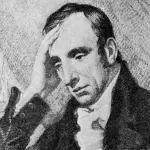
—Was it for this That one, the fairest of all Rivers, lov'd To blend his murmurs with my Nurse's song, And from his alder shades and rocky falls, And from his fords and shallows, sent a voice That flow'd along my dreams? For this, didst Thou, O Derwent! travelling over the green Plains Near my 'sweet Birthplace', didst thou, beauteous Stream
Why did my parents send me to the schools That I with knowledge might enrich my mind? Since the desire to know first made men fools, And did corrupt the root of all mankind.





Comment form: