For God's sake hold your tongue, and let me love, Or chide my palsy, or my gout, My five gray hairs, or ruined fortune flout, With wealth your state, your mind with arts improve, Take you a course, get you a place, Observe his honor, or his grace, Or the king's real, or his stampèd face Contemplate; what you will, approve, So you will let me love.
Alas, alas, who's injured by my love? What merchant's ships have my sighs drowned? Who says my tears have overflowed his ground? When did my colds a forward spring remove? When did the heats which my veins fill
St. Agnes' Eve—Ah, bitter chill it was! The owl, for all his feathers, was a-cold; The hare limp'd trembling through the frozen grass, And silent was the flock in woolly fold: Numb were the Beadsman's fingers, while he told His rosary, and while his frosted breath, Like pious incense from a censer old, Seem'd taking flight for heaven, without a death, Past the sweet Virgin's picture, while his prayer he saith.
His prayer he saith, this patient, holy man; Then takes his lamp, and riseth from his knees, And back returneth, meagre, barefoot, wan, Along the chapel aisle by slow degrees: The sculptur'd dead, on each side, seem to freeze,
You are a friend then, as I make it out, Of our man Shakespeare, who alone of us Will put an ass's head in Fairyland As he would add a shilling to more shillings, All most harmonious, — and out of his Miraculous inviolable increase Fills Ilion, Rome, or any town you like Of olden time with timeless Englishmen; And I must wonder what you think of him — All you down there where your small Avon flows By Stratford, and where you're an Alderman. Some, for a guess, would have him riding back To be a farrier there, or say a dyer; Or maybe one of your adept surveyors; Or like enough the wizard of all tanners.
From childhood’s hour I have not been As others were—I have not seen As others saw—I could not bring My passions from a common spring— From the same source I have not taken My sorrow—I could not awaken My heart to joy at the same tone— And all I lov’d—I lov’d alone— Then—in my childhood—in the dawn Of a most stormy life—was drawn From ev’ry depth of good and ill The mystery which binds me still— From the torrent, or the fountain— From the red cliff of the mountain— From the sun that ’round me roll’d
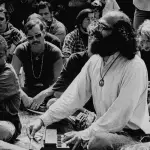
America I’ve given you all and now I’m nothing. America two dollars and twentyseven cents January 17, 1956. I can’t stand my own mind. America when will we end the human war? Go fuck yourself with your atom bomb. I don’t feel good don’t bother me. I won’t write my poem till I’m in my right mind. America when will you be angelic?
'There it is!– You play beside a death-bed like a child, Yet measure to yourself a prophet's place To teach the living. None of all these things, Can women understand. You generalise, Oh, nothing!–not even grief! Your quick-breathed hearts, So sympathetic to the personal pang,
Oh! yet one smile, tho' dark may lower Around thee clouds of woe and ill, Let me yet feel that I have power, Mid Fate's bleak storms, to soothe thee still.
Tho' sadness be upon thy brow, Yet let it turn, dear love, to me, I cannot bear that thou should'st know Sorrow I do not share with thee.
What shall I do with this absurdity — O heart, O troubled heart — this caricature, Decrepit age that has been tied to me As to a dog's tail? Never had I more Excited, passionate, fantastical Imagination, nor an ear and eye
There is a coal-black Angel With a thick Afric lip, And he dwells (like the hunted and harried) In a swamp where the green frogs dip. But his face is against a City Which is over a bay of the sea, And he breathes with a breath that is blastment, And dooms by a far decree.
"As certain also of your own poets have said"— (Acts 17.28) Cleon the poet (from the sprinkled isles, Lily on lily, that o'erlace the sea And laugh their pride when the light wave lisps "Greece")— To Protus in his Tyranny: much health!
Out of a high meadow where flowers bloom above cloud, come down; pursue me with reasons for smiling without malice.
Bring mimic pride like that of the seedling fir, surprise in the perfect leg-stems and queries unstirred by recognition or fear pooled in the deep eyes.
Stars from five wars, scars, Words filled with ice and fear, Nightflares and fogginess, and a studied regularity. Gon’ lay down my sword ’n’ shield— Down by the river side, down by the river side— Down by the river side...
Aunt Mildred tied up her petticoats with binder’s twine, and my great-uncle Ezekiel waxed and waxed his moustaches into flexibility. It was the whole family off then into the dangerous continent of air
and while the salesman with the one gold eyetooth told us the cords at our ankles were guaranteed to stretch to their utmost and then bring us safely back to the fried chicken and scalloped potatoes of Sunday dinner
MARIA NEFELE: I walk in thorns in the dark of what’s to happen and what has with my only weapon my only defense my nails purple like cyclamens.
ANTIPHONIST: I saw her everywhere. Holding a glass and staring in space. Lying down listening to records. Walking the streets in wide trousers and an old
AN ANATOMY OF THE WORLD Wherein, by occasion of the untimely death of Mistress Elizabeth Drury, the frailty and the decay of this whole world is represented THE FIRST ANNIVERSARY When that rich soul which to her heaven is gone, Whom all do celebrate, who know they have one (For who is sure he hath a soul, unless It see, and judge, and follow worthiness,
Beholde, o man! lyft up thyn eye and see What mortall peyne I suffre for thi trespace. With pietous voys I crye and sey to the: Beholde my woundes, behold my blody face, Beholde the rebukes that do me so manace, Beholde my enemyes that do me so despice, And how that I, to reforme the to grace, Was like a lambe offred in sacryfice.
...
And geyn thi pryde behold my gret mekenesse; Geyn thyn envie behold my charité; Geyn thi leccherye behold my chast clennesse; Geyn thi covetyse behold my poverté.
Before our lives divide for ever, While time is with us and hands are free, (Time, swift to fasten and swift to sever Hand from hand, as we stand by the sea) I will say no word that a man might say Whose whole life's love goes down in a day; For this could never have been; and never, Though the gods and the years relent, shall be.
Is it worth a tear, is it worth an hour, To think of things that are well outworn? Of fruitless husk and fugitive flower, The dream foregone and the deed forborne? Though joy be done with and grief be vain, Time shall not sever us wholly in twain;
I first discovered what was killing these men. I had three sons who worked with their father in the tunnel: Cecil, aged 23, Owen, aged 21, Shirley, aged 17. They used to work in a coal mine, not steady work for the mines were not going much of the time. A power Co. foreman learned that we made home brew, he formed a habit of dropping in evenings to drink, persuading the boys and my husband —




Comment form: