And in a little while we broke under the strain: suppurations ad nauseam, the wanting to be taller, though it‘s simply about being mysterious, i.e., not taller, like any tree in any forest. Mute, the pancake describes you. It had tiny roman numerals embedded in its rim. It was a pancake clock. They had ’em in those days, always getting smaller, which is why they finally became extinct.
Why did my parents send me to the schools That I with knowledge might enrich my mind? Since the desire to know first made men fools, And did corrupt the root of all mankind.
In Rome on the Campo dei Fiori baskets of olives and lemons, cobbles spattered with wine and the wreckage of flowers. Vendors cover the trestles with rose-pink fish; armfuls of dark grapes heaped on peach-down.
I have always aspired to a more spacious form that would be free from the claims of poetry or prose and would let us understand each other without exposing the author or reader to sublime agonies.
In the very essence of poetry there is something indecent: a thing is brought forth which we didn’t know we had in us, so we blink our eyes, as if a tiger had sprung out and stood in the light, lashing his tail.
As rising from the vegetable World My Theme ascends, with equal Wing ascend, My panting Muse; and hark, how loud the Woods Invite you forth in all your gayest Trim. Lend me your Song, ye Nightingales! oh pour The mazy-running Soul of Melody Into my varied Verse! while I deduce, From the first Note the hollow Cuckoo sings,
My sister! my sweet sister! if a name Dearer and purer were, it should be thine. Mountains and seas divide us, but I claim No tears, but tenderness to answer mine: Go where I will, to me thou art the same A lov'd regret which I would not resign. There yet are two things in my destiny— A world to roam through, and a home with thee.
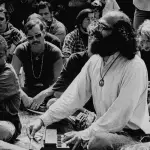
America I’ve given you all and now I’m nothing. America two dollars and twentyseven cents January 17, 1956. I can’t stand my own mind. America when will we end the human war? Go fuck yourself with your atom bomb. I don’t feel good don’t bother me. I won’t write my poem till I’m in my right mind. America when will you be angelic?
I'm Ramón González Barbagelata from anywhere, from Cucuy, from Paraná, from Rio Turbio, from Oruro, from Maracaibo, from Parral, from Ovalle, from Loconmilla, I'm the poor devil from the poor Third World, I'm the third-class passenger installed, good God! in the lavish whiteness of snow-covered mountains, concealed among orchids of subtle idiosyncrasy.
I've arrived at this famous year 2000, and what do I get? With what do I scratch myself? What do I have to do with the three glorious zeros that flaunt themselves over my very own zero, my own non-existence? Pity that brave heart awaiting its call or the man enfolded by warmer love, nothing's left today except my flimsy skeleton,
I’ll tell thee now (dear Love) what thou shalt do To anger destiny, as she doth us, How I shall stay, though she esloygne me thus And how posterity shall know it too; How thine may out-endure Sybil’s glory, and obscure Her who from Pindar could allure, And her, through whose help Lucan is not lame, And her, whose book (they say) Homer did find, and name.
Study our manuscripts, those myriads Of letters, which have past twixt thee and me, Thence write our annals, and in them will be To all whom love’s subliming fire invades, Rule and example found;
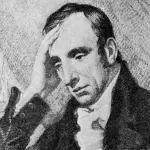
—Was it for this That one, the fairest of all Rivers, lov'd To blend his murmurs with my Nurse's song, And from his alder shades and rocky falls, And from his fords and shallows, sent a voice That flow'd along my dreams? For this, didst Thou, O Derwent! travelling over the green Plains Near my 'sweet Birthplace', didst thou, beauteous Stream
Harmonious Powers with Nature work On sky, earth, river, lake, and sea: Sunshine and storm, whirlwind and breeze All in one duteous task agree.
Once did I see a slip of earth, By throbbing waves long undermined, Loosed from its hold; — how no one knew But all might see it float, obedient to the wind.
Might see it, from the mossy shore Dissevered float upon the Lake, Float, with its crest of trees adorned On which the warbling birds their pastime take.
The sky is cloudy, yellowed by the smoke. For view there are the houses opposite Cutting the sky with one long line of wall Like solid fog: far as the eye can stretch Monotony of surface & of form Without a break to hang a guess upon. No bird can make a shadow as it flies, For all is shadow, as in ways o'erhung By thickest canvass, where the golden rays Are clothed in hemp. No figure lingering Pauses to feed the hunger of the eye Or rest a little on the lap of life. All hurry on & look upon the ground, Or glance unmarking at the passers by The wheels are hurrying too, cabs, carriages
(Variant printed in Samuel Daniel’s 1623 Works) To thee, pure spirit, to thee alone addressed Is this joint work, by double interest thine, Thine by his own, and what is done of mine Inspired by thee, thy secret power impressed.
MARIA NEFELE: I walk in thorns in the dark of what’s to happen and what has with my only weapon my only defense my nails purple like cyclamens.
ANTIPHONIST: I saw her everywhere. Holding a glass and staring in space. Lying down listening to records. Walking the streets in wide trousers and an old






Comment form: