During the Second World War, I was going home one night along a street I seldom used. All the stores were closed except one—a small fruit store. An old Italian was inside to wait on customers. As I was paying him I saw that he was sad.
For God's sake hold your tongue, and let me love, Or chide my palsy, or my gout, My five gray hairs, or ruined fortune flout, With wealth your state, your mind with arts improve, Take you a course, get you a place, Observe his honor, or his grace, Or the king's real, or his stampèd face Contemplate; what you will, approve, So you will let me love.
Alas, alas, who's injured by my love? What merchant's ships have my sighs drowned? Who says my tears have overflowed his ground? When did my colds a forward spring remove? When did the heats which my veins fill
The next morning I felt that our house had been lifted away from its foundation during the night, and was now adrift, though so heavy it drew a foot or more of whatever was buoying it up, not water but something cold and thin and clear, silence riffling its surface as the house began to turn on a strengthening current,
An axe rang sharply ’mid those forest shades Which from creation toward the skies had tower’d In unshorn beauty. There, with vigorous arm Wrought a bold emigrant, and by his side His little son, with question and response, Beguiled the toil. ‘Boy, thou hast never seen Such glorious trees. Hark, when their giant trunks Fall, how the firm earth groans. Rememberest thou The mighty river, on whose breast we sail’d, So many days, on toward the setting sun? Our own Connecticut, compar’d to that, Was but a creeping stream.’ ‘Father, the brook That by our door went singing, where I launch’d
Stars from five wars, scars, Words filled with ice and fear, Nightflares and fogginess, and a studied regularity. Gon’ lay down my sword ’n’ shield— Down by the river side, down by the river side— Down by the river side...
One face looks out from all his canvases, One selfsame figure sits or walks or leans: We found her hidden just behind those screens, That mirror gave back all her loveliness. A queen in opal or in ruby dress, A nameless girl in freshest summer-greens, A saint, an angel — every canvas means The same one meaning, neither more or less.
The craving of Samuel Rouse for clearance to create was surely as hot as the iron that buffeted him. His passion for freedom so strong that it molded the smouldering fashions he laced, for how also could a slave plot or counterplot such incomparable shapes,
form or reform, for house after house, the intricate Patio pattern, the delicate Rose and Lyre, the Debutante Settee,
When you get in on a try you never learn it back umpteen times the tenth part of a featured world in black and in back it’s roses and fostered nail bite rhyme sling slang, a song that teaches without travail of the tale, the one you longing live and singing burn
It’s insane to remain a trope, of a rinsing out or a ringing whatever, it’s those bells that . . .
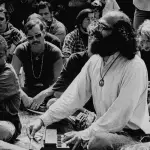
America I’ve given you all and now I’m nothing. America two dollars and twentyseven cents January 17, 1956. I can’t stand my own mind. America when will we end the human war? Go fuck yourself with your atom bomb. I don’t feel good don’t bother me. I won’t write my poem till I’m in my right mind. America when will you be angelic?
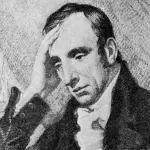
Earth has not any thing to show more fair: Dull would he be of soul who could pass by A sight so touching in its majesty: This City now doth, like a garment, wear The beauty of the morning; silent, bare, Ships, towers, domes, theatres, and temples lie Open unto the fields, and to the sky; All bright and glittering in the smokeless air.
Wyatt resteth here, that quick could never rest; Whose heavenly gifts increased by disdain, And virtue sank the deeper in his breast; Such profit he by envy could obtain.
A head where wisdom mysteries did frame, Whose hammers beat still in that lively brain As on a stithy where that some work of fame
Where, like a pillow on a bed A pregnant bank swell'd up to rest The violet's reclining head, Sat we two, one another's best. Our hands were firmly cemented With a fast balm, which thence did spring; Our eye-beams twisted, and did thread Our eyes upon one double string; So to'intergraft our hands, as yet Was all the means to make us one, And pictures in our eyes to get Was all our propagation. As 'twixt two equal armies fate Suspends uncertain victory, Our souls (which to advance their state
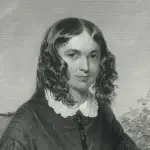
'There it is!– You play beside a death-bed like a child, Yet measure to yourself a prophet's place To teach the living. None of all these things, Can women understand. You generalise, Oh, nothing!–not even grief! Your quick-breathed hearts, So sympathetic to the personal pang,
My dog has died. I buried him in the garden next to a rusted old machine.
Some day I'll join him right there, but now he's gone with his shaggy coat, his bad manners and his cold nose, and I, the materialist, who never believed in any promised heaven in the sky







Comment form: