On this Day I Complete my Thirty-Sixth Year 'Tis time this heart should be unmoved, Since others it hath ceased to move: Yet though I cannot be beloved, Still let me love!
But do not let us quarrel any more, No, my Lucrezia; bear with me for once: Sit down and all shall happen as you wish. You turn your face, but does it bring your heart? I'll work then for your friend's friend, never fear, Treat his own subject after his own way, Fix his own time, accept too his own price, And shut the money into this small hand When next it takes mine. Will it? tenderly? Oh, I'll content him,—but to-morrow, Love! I often am much wearier than you think, This evening more than usual, and it seems As if—forgive now—should you let me sit Here by the window with your hand in mine And look a half-hour forth on Fiesole,
What shall I do with this absurdity — O heart, O troubled heart — this caricature, Decrepit age that has been tied to me As to a dog's tail? Never had I more Excited, passionate, fantastical Imagination, nor an ear and eye
And in a little while we broke under the strain: suppurations ad nauseam, the wanting to be taller, though it‘s simply about being mysterious, i.e., not taller, like any tree in any forest. Mute, the pancake describes you. It had tiny roman numerals embedded in its rim. It was a pancake clock. They had ’em in those days, always getting smaller, which is why they finally became extinct.
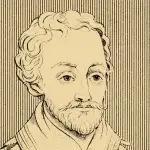
Wyatt resteth here, that quick could never rest; Whose heavenly gifts increased by disdain, And virtue sank the deeper in his breast; Such profit he by envy could obtain.
A head where wisdom mysteries did frame, Whose hammers beat still in that lively brain As on a stithy where that some work of fame
See, Winter comes to rule the varied year, Sullen and sad, with all his rising train— Vapours, and clouds, and storms. Be these my theme, These, that exalt the soul to solemn thought And heavenly musing. Welcome, kindred glooms! Congenial horrors, hail! With frequent foot, Pleas’d have I, in my cheerful morn of life, When nurs’d by careless solitude I liv’d And sung of Nature with unceasing joy, Pleas’d have I wander’d through your rough domain; Trod the pure virgin-snows, myself as pure; Heard the winds roar, and the big torrent burst; Or seen the deep-fermenting tempest brew’d In the grim evening-sky. Thus pass’d the time, Till through the lucid chambers of the south
To the Priest, on Observing how most Men mistake their own Talents When beasts could speak (the learned say, They still can do so ev'ry day), It seems, they had religion then, As much as now we find in men.
In the greenest of our valleys By good angels tenanted, Once a fair and stately palace— Radiant palace—reared its head. In the monarch Thought’s dominion, It stood there! Never seraph spread a pinion Over fabric half so fair!
Most happy letters, fram'd by skilful trade, With which that happy name was first design'd: The which three times thrice happy hath me made, With gifts of body, fortune, and of mind. The first my being to me gave by kind, From mother's womb deriv'd by due descent, The second is my sovereign Queen most kind, That honour and large richesse to me lent.
Once, in the city of Kalamazoo, The gods went walking, two and two, With the friendly phoenix, the stars of Orion, The speaking pony and singing lion. For in Kalamazoo in a cottage apart Lived the girl with the innocent heart.
Thenceforth the city of Kalamazoo Was the envied, intimate chum of the sun. He rose from a cave by the principal street. The lions sang, the dawn-horns blew, And the ponies danced on silver feet. He hurled his clouds of love around; Deathless colors of his old heart Draped the houses and dyed the ground.
I I weep for Adonais—he is dead! Oh, weep for Adonais! though our tears Thaw not the frost which binds so dear a head! And thou, sad Hour, selected from all years To mourn our loss, rouse thy obscure compeers, And teach them thine own sorrow, say: "With me Died Adonais; till the Future dares Forget the Past, his fate and fame shall be An echo and a light unto eternity!"
II Where wert thou, mighty Mother, when he lay, When thy Son lay, pierc'd by the shaft which flies In darkness? where was lorn Urania
I dreamed that I was old: in stale declension Fallen from my prime, when company Was mine, cat-nimbleness, and green invention, Before time took my leafy hours away.
My wisdom, ripe with body’s ruin, found Itself tart recompense for what was lost In false exchange: since wisdom in the ground Has no apocalypse or pentecost.
Huzza! Hodgson, we are going, Our embargo's off at last; Favourable breezes blowing Bend the canvass o'er the mast. From aloft the signal's streaming, Hark! the farewell gun is fir'd; Women screeching, tars blaspheming, Tell us that our time's expir'd.
Late, late yestreen I saw the new Moon, With the old Moon in her arms; And I fear, I fear, my Master dear! We shall have a deadly storm. (Ballad of Sir Patrick Spence) I Well! If the Bard was weather-wise, who made The grand old ballad of Sir Patrick Spence, This night, so tranquil now, will not go hence
Vainly my heart had with thy sorceries striven: It had no refuge from thy love,—no Heaven But in thy fatal presence;—from afar It owned thy power and trembled like a star O’erfraught with light and splendor. Could I deem How dark a shadow should obscure its beam?— Could I believe that pain could ever dwell Where thy bright presence cast its blissful spell?
"As certain also of your own poets have said"— (Acts 17.28) Cleon the poet (from the sprinkled isles, Lily on lily, that o'erlace the sea And laugh their pride when the light wave lisps "Greece")— To Protus in his Tyranny: much health!








Comment form: