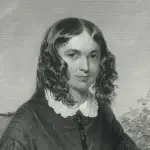
No other man, unless it was Doc Hill, Did more for people in this town than l. And all the weak, the halt, the improvident And those who could not pay flocked to me. I was good-hearted, easy Doctor Meyers. I was healthy, happy, in comfortable fortune, Blest with a congenial mate, my children raised, All wedded, doing well in the world.
(from Julius Caesar, spoken by Marc Antony)
Friends, Romans, countrymen, lend me your ears;
I come to bury Caesar, not to praise him.
The evil that men do lives after them;
The good is oft interred with their bones;
So let it be with Caesar. The noble Brutus
Hath told you Caesar was ambitious:
If it were so, it was a grievous fault,
(from A Midsummer Night's Dream, spoken by Bottom)
When my cue comes, call me, and I will answer. My next is “Most fair Pyramus.” Heigh-ho! Peter Quince?
Flute the bellows-mender? Snout the tinker? Starveling? God’s my life, stol'n hence, and left me asleep?
I have had a most rare vision. I have had a dream—past the wit of man to say what dream it was.
Man is but an ass if he go about to expound this dream. Methought I was—there is no man can tell what.
Methought I was, and methought I had—but man is but a patched fool if he will offer to say what methought I had.
The eye of man hath not heard, the ear of man hath not seen, man’s hand is not able to taste, his tongue to conceive, nor his heart to report what my dream was. I will get Peter Quince to write a ballad of this dream.It shall be called “Bottom’s Dream” because it hath no bottom. And I will sing it in the latter end of a play before the duke. Peradventure, to make it the more gracious, I shall sing it at her death.
217 Ambition was my idol, which was broken Before the shrines of Sorrow and of Pleasure; And the two last have left me many a token O'er which reflection may be made at leisure: Now, like Friar Bacon's brazen head, I've spoken, 'Time is, Time was, Time's past', a chymic treasure Is glittering youth, which I have spent betimes— My heart in passion, and my head on rhymes.
60 Her eye (I'm very fond of handsome eyes) Was large and dark, suppressing half its fire Until she spoke, then through its soft disguise Flash'd an expression more of pride than ire, And love than either; and there would arise A something in them which was not desire, But would have been, perhaps, but for the soul Which struggled through and chasten'd down the whole.
61 Her glossy hair was cluster'd o'er a brow Bright with intelligence, and fair, and smooth; Her eyebrow's shape was like the aerial bow, Her cheek all purple with the beam of youth,
It lies not in our power to love or hate, For will in us is overruled by fate. When two are stripped, long ere the course begin, We wish that one should lose, the other win; And one especially do we affect Of two gold ingots, like in each respect: The reason no man knows; let it suffice What we behold is censured by our eyes. Where both deliberate, the love is slight: Who ever loved, that loved not at first sight?
Thus every Creature, and of every Kind, The secret Joys of sweet Coition find: Not only Man’s Imperial Race; but they That wing the liquid Air, or swim the Sea, Or haunt the Desert, rush into the flame: For Love is Lord of all; and is in all the same. ’Tis with this rage, the Mother Lion stung, Scours o’re the Plain; regardless of her young:
Beholde, o man! lyft up thyn eye and see What mortall peyne I suffre for thi trespace. With pietous voys I crye and sey to the: Beholde my woundes, behold my blody face, Beholde the rebukes that do me so manace, Beholde my enemyes that do me so despice, And how that I, to reforme the to grace, Was like a lambe offred in sacryfice.
...
And geyn thi pryde behold my gret mekenesse; Geyn thyn envie behold my charité; Geyn thi leccherye behold my chast clennesse; Geyn thi covetyse behold my poverté.
Before our lives divide for ever, While time is with us and hands are free, (Time, swift to fasten and swift to sever Hand from hand, as we stand by the sea) I will say no word that a man might say Whose whole life's love goes down in a day; For this could never have been; and never, Though the gods and the years relent, shall be.
Is it worth a tear, is it worth an hour, To think of things that are well outworn? Of fruitless husk and fugitive flower, The dream foregone and the deed forborne? Though joy be done with and grief be vain, Time shall not sever us wholly in twain;
There is no radical shift of light or redwings calling areas of marsh their territories yet, nor plovers probing for copepods. Only a yellow front-end loader laying out a new berm on the beach, from tubes too heavy to be called hoses, its audience one man and his protesting dog. No frosted
Hatred and vengeance, my eternal portion, Scarce can endure delay of execution, Wait, with impatient readiness, to seize my Soul in a moment.
Damned below Judas: more abhorred than he was, Who for a few pence sold his holy master. Twice betrayed, Jesus me, the last delinquent, Deems the profanest.
Man disavows, and Deity disowns me: Hell might afford my miseries a shelter; Therefore hell keeps her ever-hungry mouths all Bolted against me.
There is a coal-black Angel With a thick Afric lip, And he dwells (like the hunted and harried) In a swamp where the green frogs dip. But his face is against a City Which is over a bay of the sea, And he breathes with a breath that is blastment, And dooms by a far decree.
Ne Rubeam, Pingui donatus Munere (Horace, Epistles II.i.267) While you, great patron of mankind, sustain The balanc'd world, and open all the main; Your country, chief, in arms abroad defend, At home, with morals, arts, and laws amend;
By a route obscure and lonely, Haunted by ill angels only, Where an Eidolon, named NIGHT, On a black throne reigns upright, I have reached these lands but newly From an ultimate dim Thule— From a wild weird clime that lieth, sublime, Out of SPACE—Out of TIME.
Bottomless vales and boundless floods, And chasms, and caves, and Titan woods, With forms that no man can discover For the tears that drip all over; Mountains toppling evermore Into seas without a shore;
During the Second World War, I was going home one night along a street I seldom used. All the stores were closed except one—a small fruit store. An old Italian was inside to wait on customers. As I was paying him I saw that he was sad.
I In a far country, and a distant age, Ere sprites and fays had bade farewell to earth, A boy was born of humble parentage; The stars that shone upon his lonely birth Did seem to promise sovereignty and fame— Yet no tradition hath preserved his name.
II ’T is said that on the night when he was born, A beauteous shape swept slowly through the room; Its eyes broke on the infant like a morn, And his cheek brightened like a rose in bloom;
Comment form: